Technical flats · 6 min read
What is a technical flat?
The drawing every garment needs before anyone cuts fabric: what it is, what it has to show, and how to tell a good one from a bad one.
The short answer
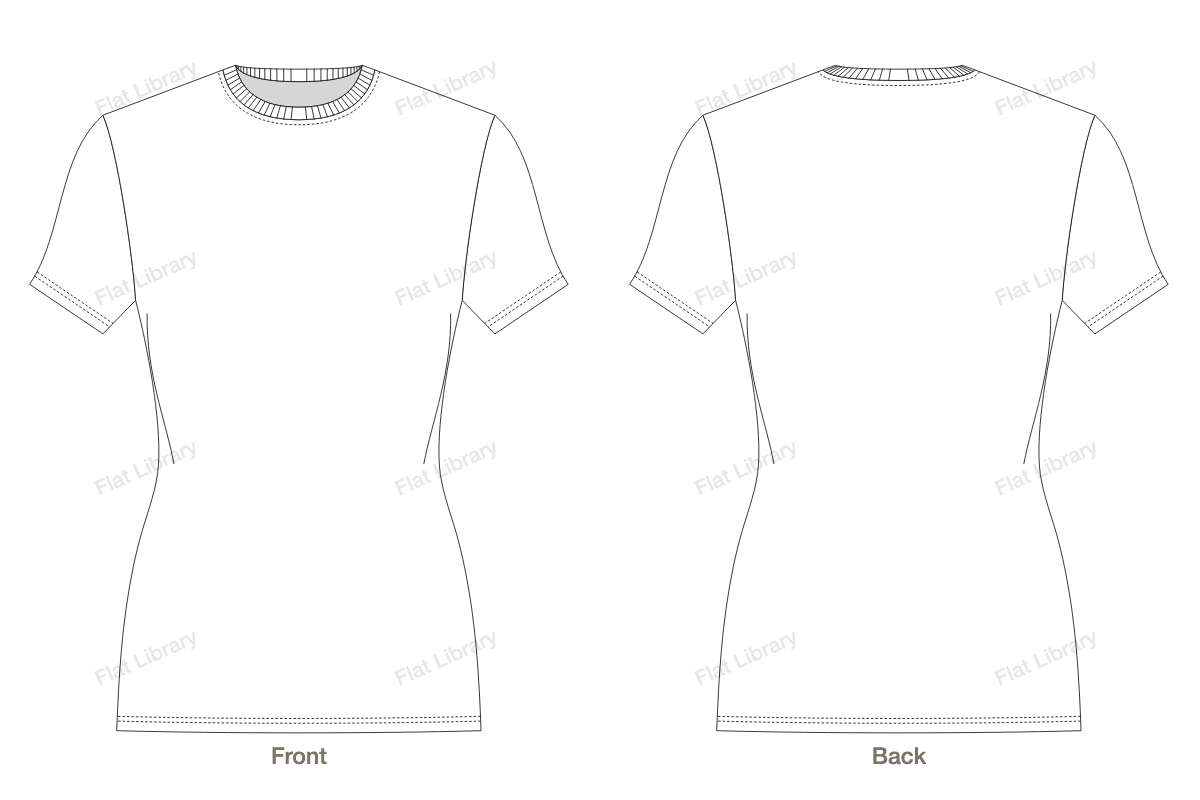
A technical flat, also called a flat sketch or fashion flat, is a black and white line drawing of a garment as if it were lying flat on a table, with no body inside it. It shows the shape, proportions, seams, stitching and details, front and back, so a patternmaker or factory can see exactly how the garment is built.
What a technical flat is
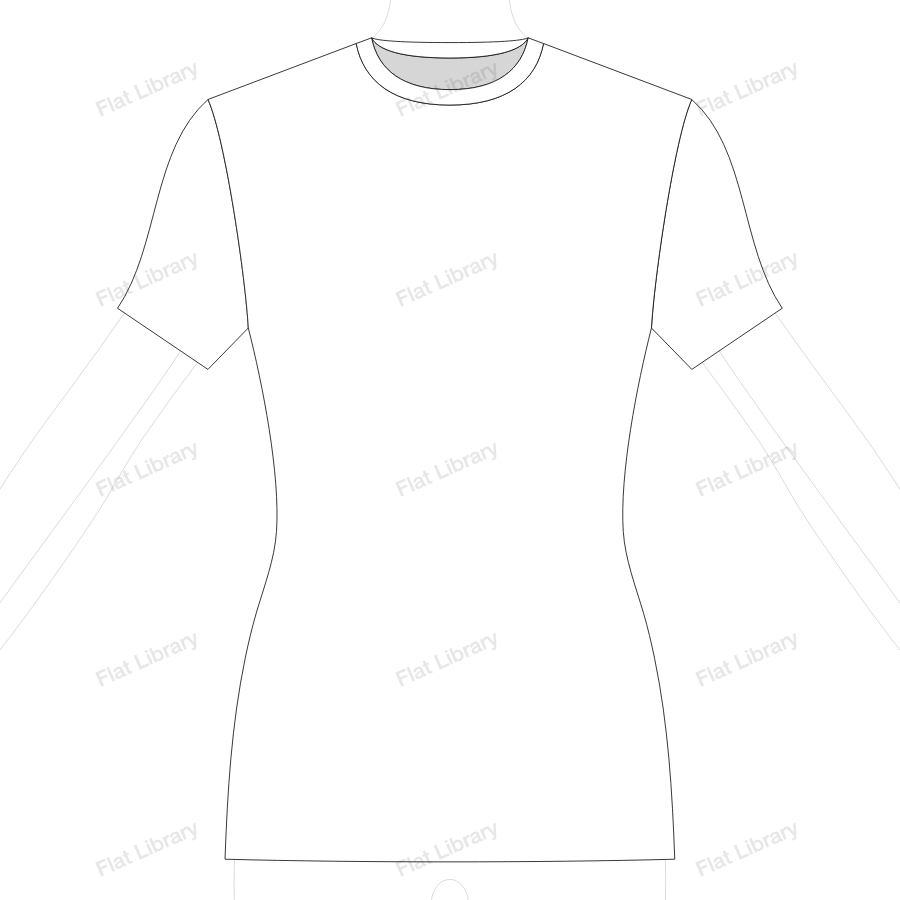
A technical flat is a two-dimensional drawing of one garment. It has no figure, no pose, no shading and no attitude. Imagine laying a finished shirt on a table, smoothing it out and tracing it, then adding every seam and row of stitching. That is the idea.
You will hear it called many things: flat, flat sketch, fashion flat, technical drawing, tech sketch, working sketch or CAD. They mean nearly the same thing, and the differences between those terms are mostly a matter of which company you work at.
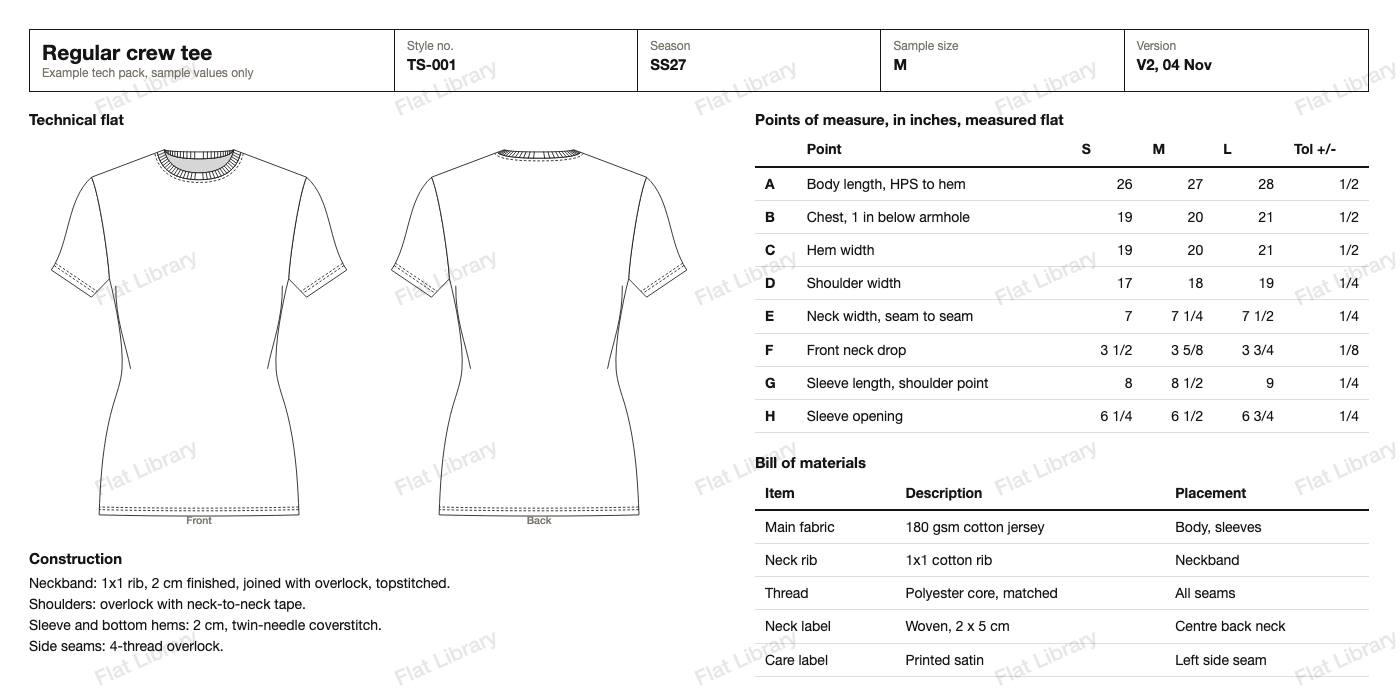
Flats do two jobs. Early on, they let a designer try ideas quickly and see a whole range side by side. Later, they become the main drawing in a tech pack, the document a factory uses to make the garment.
What a flat has to show
A flat is a set of instructions in picture form. Anything that changes how the garment is cut or sewn belongs on it.
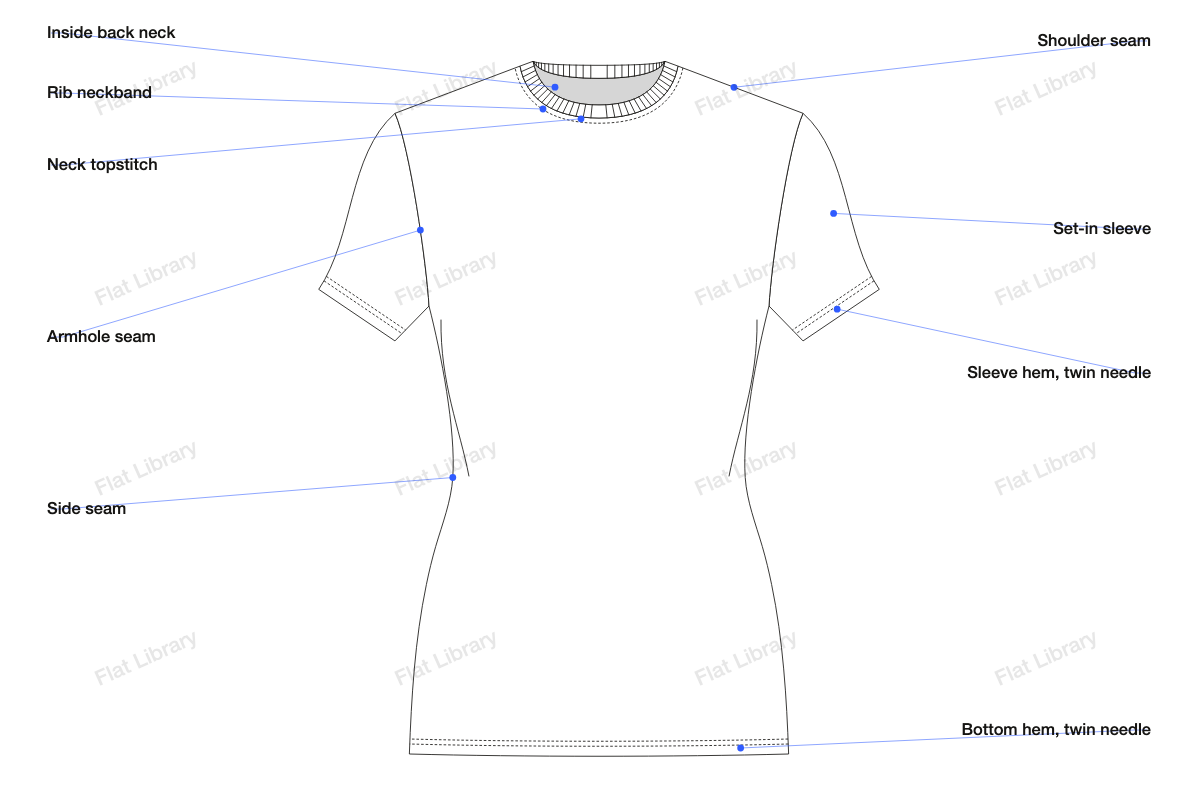
- Silhouette and proportion. Length, width, how the sleeve sits, how far the hem flares.
- Seams. Every place two pieces join: shoulders, armholes, side seams, yokes, panels.
- Stitching. Topstitching, twin needle hems and bartacks, drawn so they read differently from seams. There is a whole guide to line weights and stitch lines.
- Openings and closures. Plackets, zips, buttons, ties and vents, with the right number of buttons in the right place.
- Details and trims. Pockets, ribs, cuffs, drawcords, gathers, pleats and darts.
- The inside, when it shows. The back neck and its label area, usually shaded grey so it reads as inside.
Technical flat vs fashion illustration
This is the difference people ask about most. An illustration sells the idea. A flat builds the product. You usually need both, at different times.
| Fashion illustration | Technical flat | |
|---|---|---|
| Purpose | Show mood, attitude and the look | Show how the garment is made |
| Figure | On a stretched, posed body | No body, as if laid flat |
| Proportion | Exaggerated on purpose | True to the garment |
| Colour and shading | Often full colour and texture | Black line on white |
| Seams and stitching | Left out or suggested | All drawn |
| Read by | Buyers, clients, press, a design team | Patternmakers, sample makers, factories |
A factory cannot quote or sew from an illustration, because the things it needs are the things an illustration leaves out on purpose.
Why flats matter so much
Most sampling mistakes are communication mistakes. A sleeve drawn too short, a pocket with no stitch line, a back view nobody drew: each one makes someone at the factory guess, and a wrong guess costs a sample round.
Good flats save you that round in three ways:
- Fewer questions. A clear drawing answers things you would otherwise explain by email, sometimes across languages and time zones.
- Faster decisions. You can see a range of twenty styles on one page and notice that three of them are the same idea.
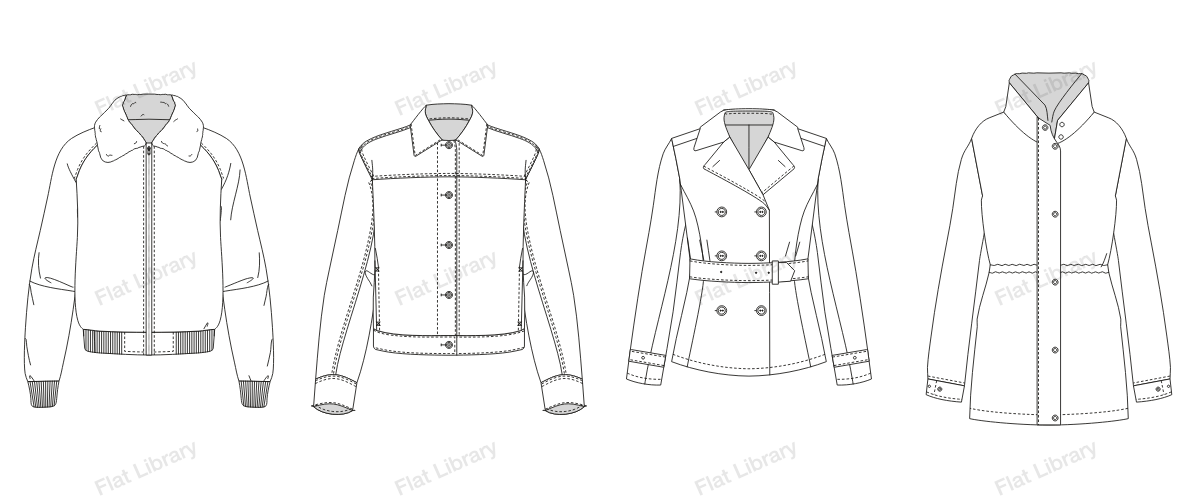
- Reuse. A good base flat becomes next season's starting point. That is the idea behind a flat library.
What makes a good flat
You can check any flat against this list, whether you drew it or someone else did.
- It is in proportion. Drawn over a body template, so it could actually fit a person. Sleeves are the part people get wrong most, usually too short.
- It is symmetrical where the garment is. Draw half and mirror it. Tracing both sides by eye always shows.
- The line weights mean something. Outlines and seams are solid, stitching is finer and dashed, so you can tell at a glance which is which.
- Lines meet. Shapes are closed and joined, so they can be filled with colour without leaking and edited without falling apart.
- The back matches the front. Same shoulder, same side seam, same hem, same length.
- The layers have names. Sleeve, body, neckband. Anyone opening the file later can find their way around it.
Types of flats you will come across
Design flats
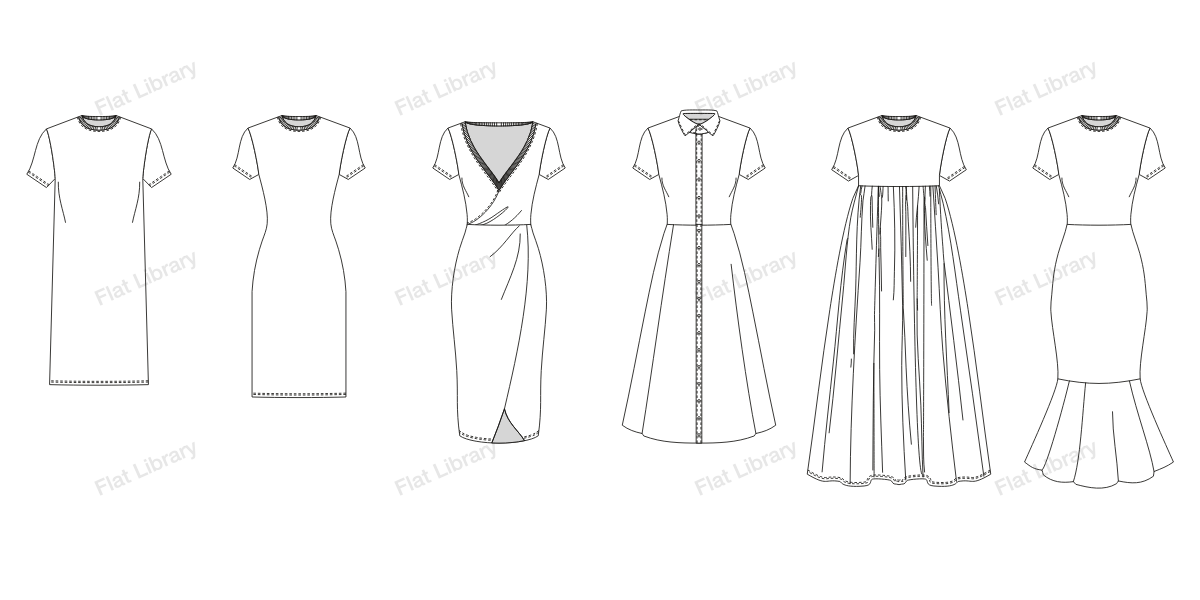
Quick and simple, made to compare ideas and build a range. They might skip some stitching.
Production flats
Fully detailed and accurate, with every seam and stitch, ready for a tech pack.
Presentation flats
Flats in colour, sometimes with fabric applied, used on line sheets and in sales meetings where a buyer needs to see what the piece is without a photo.
How to make a technical flat
There are four usual routes, and they suit different people.
- By hand. Pencil over a body template, then inked and scanned. Good for learning. Slow to change.
- From scratch in Illustrator. The professional standard, and a real skill that takes practice. Our guide to drawing flats in Illustrator walks through the method, and there is a start-to-finish example for a T-shirt.
- From bought templates. Vector files you edit by hand. Fast if a template is close to what you want, slow if it is not.
- Hired out. A freelance technical designer can do this well. See what that tends to cost.
Questions people ask
Is a flat sketch the same as a technical drawing?
In most design rooms, yes. Flat, flat sketch, technical flat, technical drawing, tech sketch and CAD are often used for the same thing. Where people do separate them, a flat is the clean drawing of the garment and a technical drawing is that flat with construction notes and measurements added.
Do technical flats need measurements?
The flat itself usually does not. Measurements live in a points of measure table in the tech pack, often with letters on a copy of the flat that show where each one is taken. The flat does need to be in proportion, because people read it as a guide to the shape.
Do I need a front and a back view?
Yes. The back is where a lot of construction hides: yokes, back neck tape, darts, vents, centre back zips and labels. A front view alone leaves the factory guessing. Add a side view or a close-up when a detail cannot be read from either.
What software do designers use for flats?
Adobe Illustrator is the usual choice, because flats are vector line work and tech pack templates and factories expect it. Some designers draw by hand and scan, and some use iPad apps for early ideas, then redraw in Illustrator for production.
Can I draw a flat by hand?
You can, and many designers learn that way. A hand-drawn flat over a body template works for a small maker or a first idea. It is harder to keep symmetrical, slower to change, and it cannot be reused the way vector line work can.
Why are flats drawn on a template?
A template, or base figure, keeps every garment in the same proportion. Without one, a sleeve can end up too short or a body too wide, and the styles in a collection stop matching each other.