Style charts · 5 min read
Types of sleeves: a chart with technical flats
Sleeve names are easy to mix up. Here are the main types drawn the same way, on the same body, so you can compare them properly.
The short answer
Most sleeves come from one of three constructions: set-in, sewn into an armhole at the shoulder; raglan, with a diagonal seam running up to the neck; and kimono or dolman, cut in one with the body or with a very deep armhole. Named types such as puff, bishop, bell and flutter are changes to the length, fullness and finish of these.
The three sleeve constructions
Before names, it helps to know how sleeves are built, because that is what a patternmaker needs from your flat.
| Construction | How it joins | On a flat, look for |
|---|---|---|
| Set-in | Sewn into an armhole at the shoulder point | A seam curving from the shoulder to the underarm |
| Raglan | A diagonal seam from the neck to the underarm | A line from the neck, with no shoulder seam across the top |
| Kimono and dolman | Cut in one with the body, or with a very deep armhole | No seam at the shoulder point, or a wide, low underarm |
The shoulder matters as much as the sleeve. A dropped shoulder moves the armhole seam down onto the arm, and changes the whole look of a garment.
Sleeve types by length
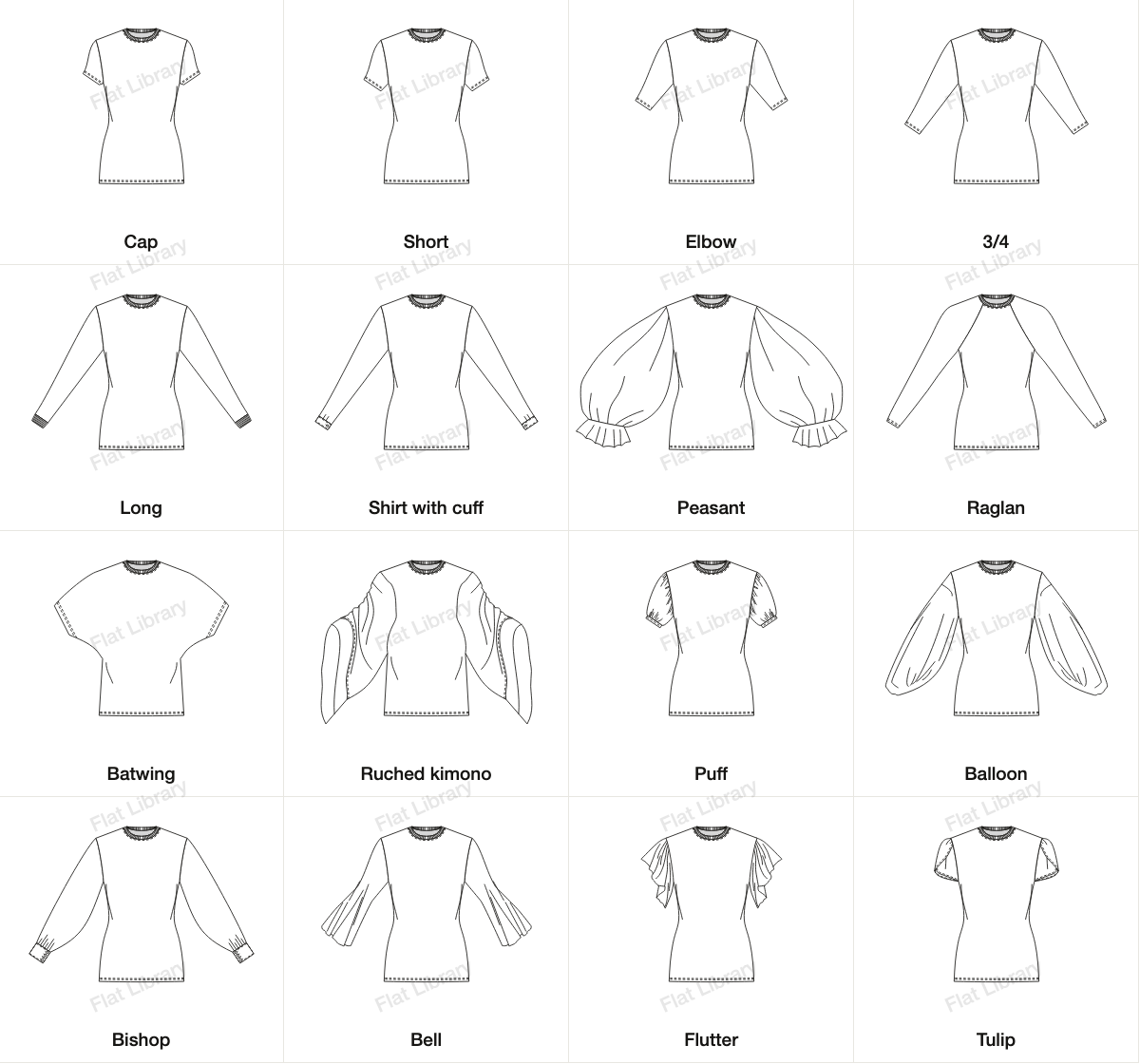
Cap sleeve. A very short sleeve that covers the top of the shoulder. Usually no seam or little fabric under the arm.
Short sleeve. The standard T-shirt sleeve, ending around the upper arm.
Elbow sleeve. Stops at, or just above, the elbow. A smart length on blouses and dresses.
3/4 sleeve. Ends between elbow and wrist, showing the wrist.
Long sleeve. Reaches the wrist, and can finish with a rib, a plain hem or a cuff.
Tailored and shirt sleeves
Shirt sleeve with cuff. A straight long sleeve with a placket and a buttoned cuff. The placket and cuff should be clear on the flat.
Raglan sleeve. The diagonal seam gives a sporty look and a lot of freedom to move. It is common on sweatshirts, baseball tees and coats.
One-piece and wide-cut sleeves
Batwing sleeve. A very deep armhole that makes the sleeve and body one wide shape, tapering at the wrist or stopping short. The dolman is a close relative.
Kimono sleeve. Traditionally wide and straight, cut in one with the body, with no armhole seam. The version on the chart is a ruched variation, with soft gathers down the arm.
Full and gathered sleeves
Puff sleeve. Gathered at the shoulder and hem, so it rounds out. Usually short, though it can go to the elbow and beyond.
Balloon sleeve. Full all the way down, gathered in at the wrist or lower arm. A statement shape that needs a fabric with some body.
Bishop sleeve. Slim at the top, full at the bottom, gathered into a cuff. Often seen on romantic blouses.
Peasant sleeve. Soft and full, gathered at the shoulder and wrist, often with a frill at the end.
Flared and decorative sleeves
Bell sleeve. Fitted through the upper arm, then flaring from the elbow or forearm like a bell.
Flutter sleeve. A short, loose sleeve that falls in soft waves from the shoulder. Usually open and light.
Tulip sleeve. A short sleeve made of two overlapping pieces, crossing at the top of the arm like tulip petals.
Drawing sleeves on a flat
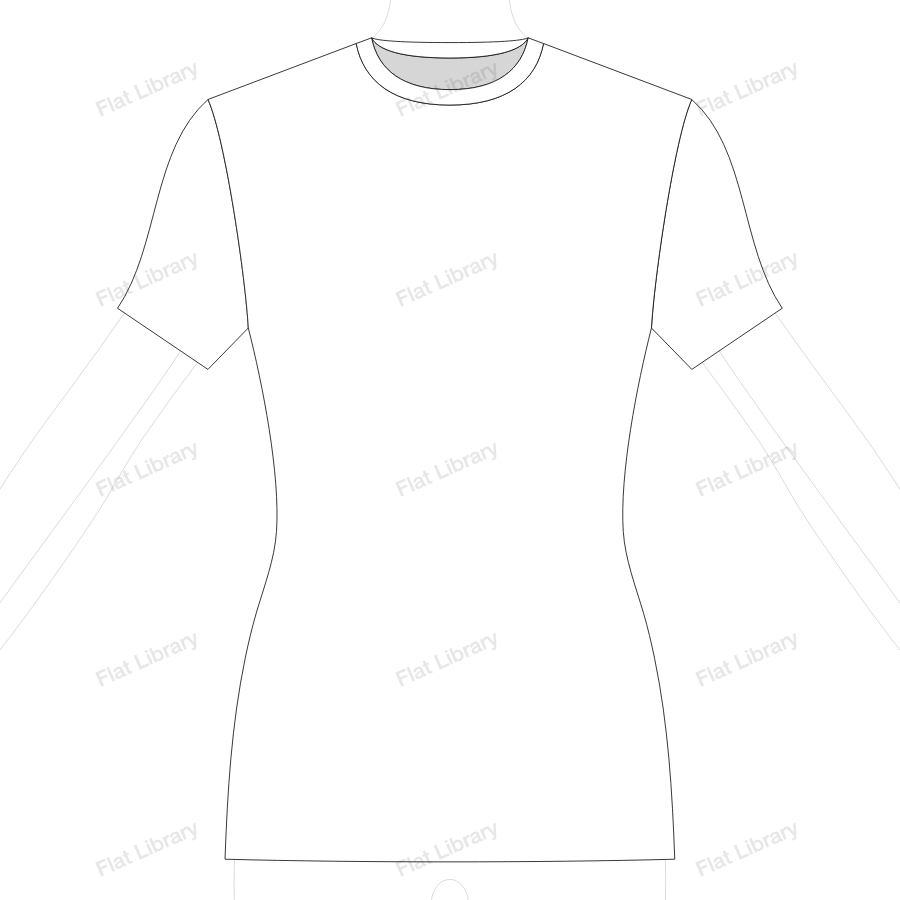
- Check the length against an arm. Sleeves drawn too short are the most common fault in flats. Use a template with arms.
- Draw each sleeve as its own shape, under the body. A raglan shape includes part of the shoulder.
- Show the fullness with a few fine lines rather than many. See line weights and stitch lines.
- Remember the finish. Rib, hem, binding and cuff are all different things to make, and a patternmaker needs to know which you want.
- Match the back. Sleeves are almost always the same on both views, apart from cuff plackets and elbow details.
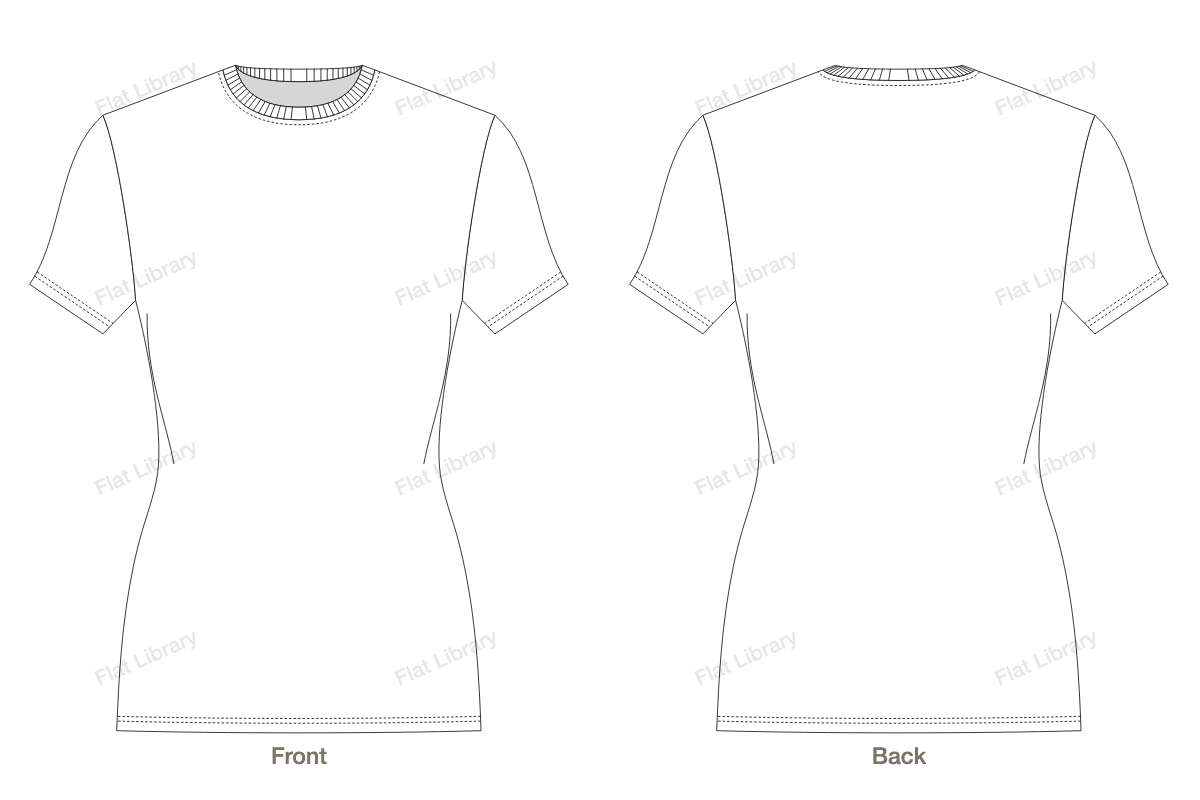
Our step-by-step guide to a T-shirt flat shows how a sleeve is drawn from the start. For the neck of the same garment, see the chart of neckline types.
Questions people ask
What are the three basic types of sleeves?
Set-in, raglan and kimono. A set-in sleeve is sewn into an armhole at the shoulder. A raglan sleeve has a diagonal seam from the underarm to the neck. A kimono sleeve is cut in one piece with the body, with no armhole seam.
What is the difference between a bishop and a balloon sleeve?
A bishop sleeve is slim at the top and gets fuller toward the wrist, where it gathers into a cuff. A balloon sleeve is full from the shoulder all the way down, so the volume is more even, like a balloon.
What is the difference between a raglan and a set-in sleeve?
It is the seam. A set-in sleeve joins at the shoulder point and runs around the armhole, while a raglan seam runs diagonally from the neck to the underarm, so the sleeve includes the shoulder. Raglans are common on sportswear because they allow plenty of movement.
What is a batwing sleeve?
A sleeve with a very deep armhole that reaches far down the side of the body, so the arm and body seem to join in a single wide shape. It is closely related to the dolman sleeve, and the names are often used for one another.
What length is a 3/4 sleeve?
It ends between the elbow and the wrist, usually a little below the elbow at around the mid forearm. It is often chosen because it shows the wrist and can be worn without rolling.
How do I show a gathered sleeve on a flat?
Draw short, fine lines coming out of the seam where the gathering happens, tapered so that they fade. Do not draw too many, as a few read better at print size. A note in the tech pack can give the gathering ratio.