The design process · 6 min read
The fashion design process, from concept to sale
How a garment gets from an idea to a customer, stage by stage: what happens at each one, who does it, and what gets passed to the next.
The short answer
The fashion design process usually runs in ten stages: research, concept, sketching, flats and range building, materials, tech pack, pattern and first sample, fit and approval, production, and selling. Each stage produces something the next one needs. Most costly mistakes come from skipping one, or from moving on before a decision is really made.
The stages at a glance
| Stage | What it produces | |
|---|---|---|
| 1 | Research | A view of the customer, the market and what is missing |
| 2 | Concept | Mood board, colours, a clear direction |
| 3 | Sketching | Many rough ideas |
| 4 | Flats and range building | A planned set of styles, drawn to scale |
| 5 | Materials | Fabrics and trims, with swatches and costs |
| 6 | Tech pack | Instructions a factory can quote and sew from |
| 7 | Pattern and first sample | A real garment to look at |
| 8 | Fit and approval | A signed-off sample and final spec |
| 9 | Production | Finished, checked stock |
| 10 | Selling | Orders, then feedback for next time |
1. Research
Every garment starts by answering a question: who is this for, and what do they need that they cannot already get? Designers look at customers, sales from past seasons, what competitors are doing, trend reports, archives, street style, art and anything else that feeds the idea.
Passes on: a clear idea of the customer, and a gap worth filling.
2. Concept
Research becomes a direction. A mood board pulls together images, colours, fabrics and shapes into one view of what the collection should feel like, and helps a team agree before anyone draws a single garment.
Passes on: a mood board, a colour story and a short statement of the idea.
3. Sketching
This is where quantity beats quality. Designers fill pages with rough ideas, often on a croquis, which is a light body template to draw over. Most of these drawings go nowhere, which is the point. Finished fashion illustrations come here too, when an idea needs to be sold to someone else.
You do not need to be good at drawing to get through this stage. There are other ways to get an idea down.
Passes on: the ideas worth developing.
4. Flats and range building
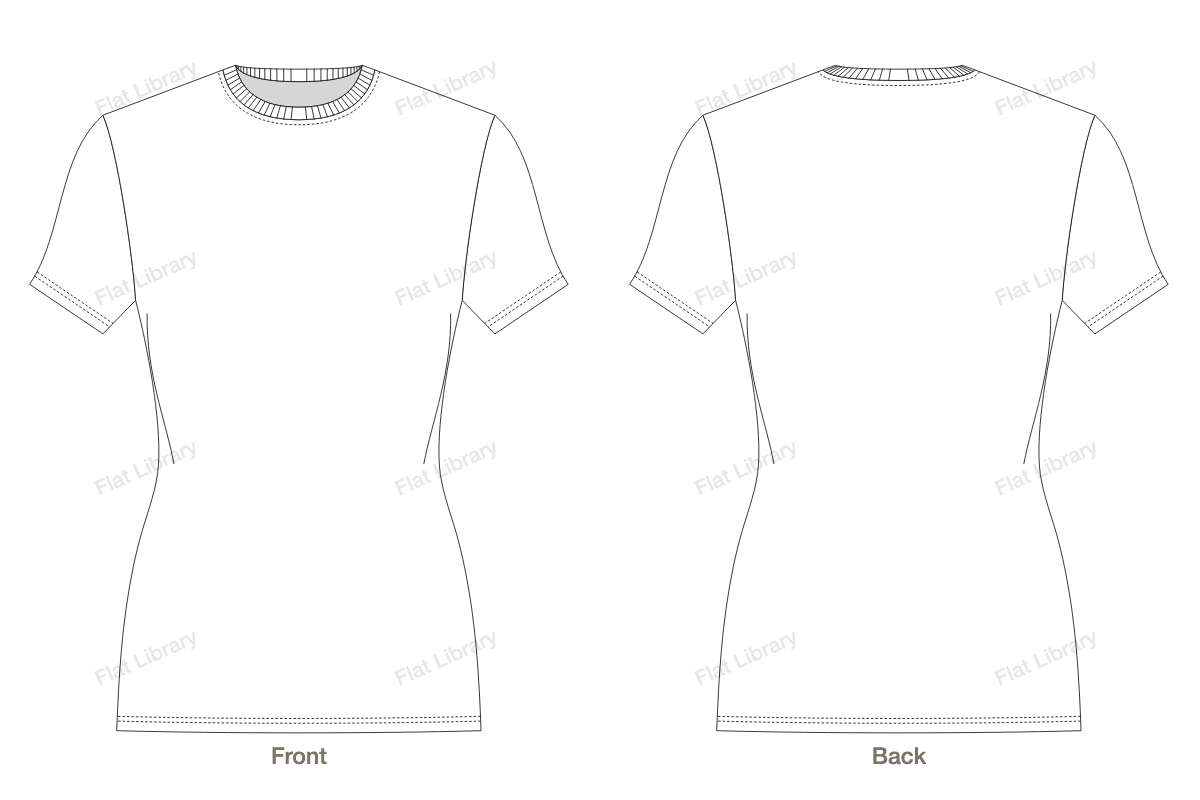
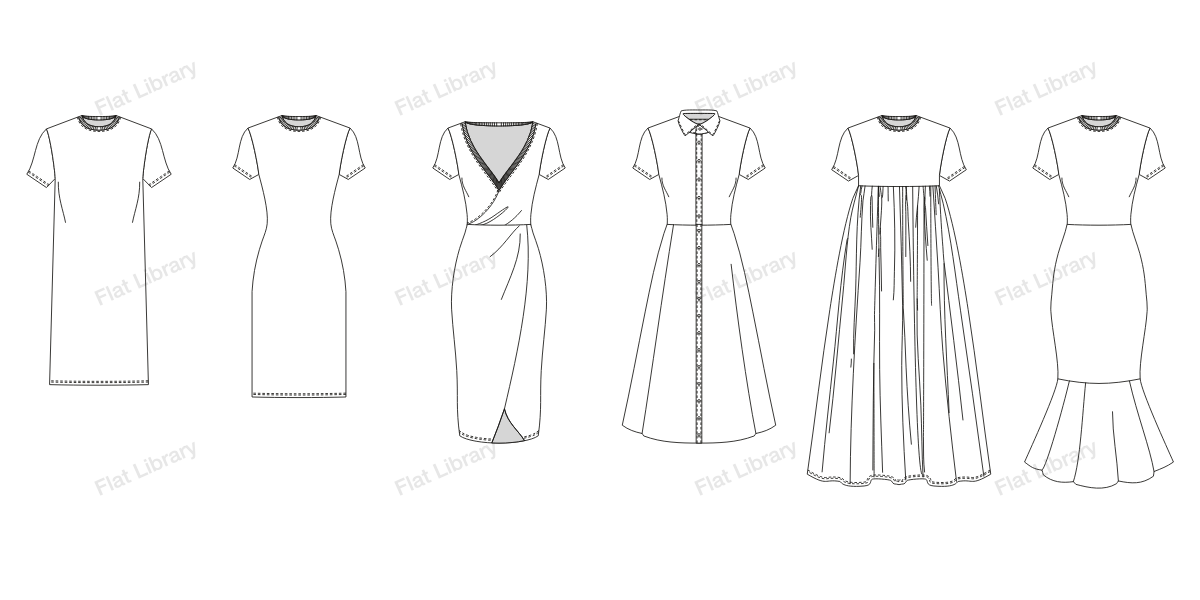
The chosen ideas become technical flats: accurate line drawings, front and back. Lining them up shows you the range as a whole. Are there enough tops for the skirts? Are two of the dresses really the same dress?
This is also where design gets real. Drawing a flat forces decisions a sketch lets you dodge, like where a seam goes or how a collar closes.
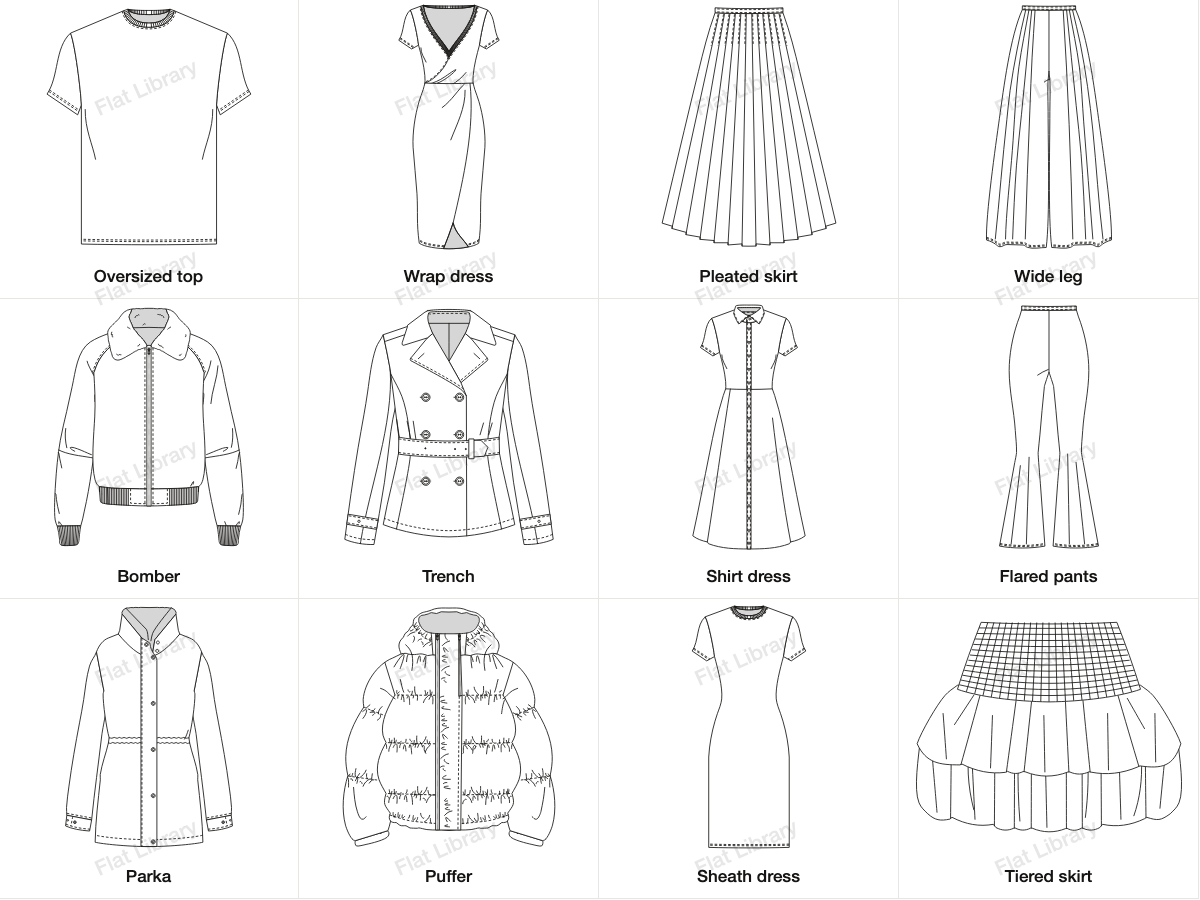
Passes on: a range plan and flats for each style.
5. Materials
Fabric is as much of the design as the drawing, and it often changes the drawing. A shape that works in a stiff cotton may collapse in a soft jersey. Designers order swatches, test them, and find trims like zips, buttons and elastics. This is also when cost starts to matter, since fabric is often the biggest part of a garment's price.
Passes on: chosen fabrics and trims, with references, minimum orders and prices.
6. Tech pack
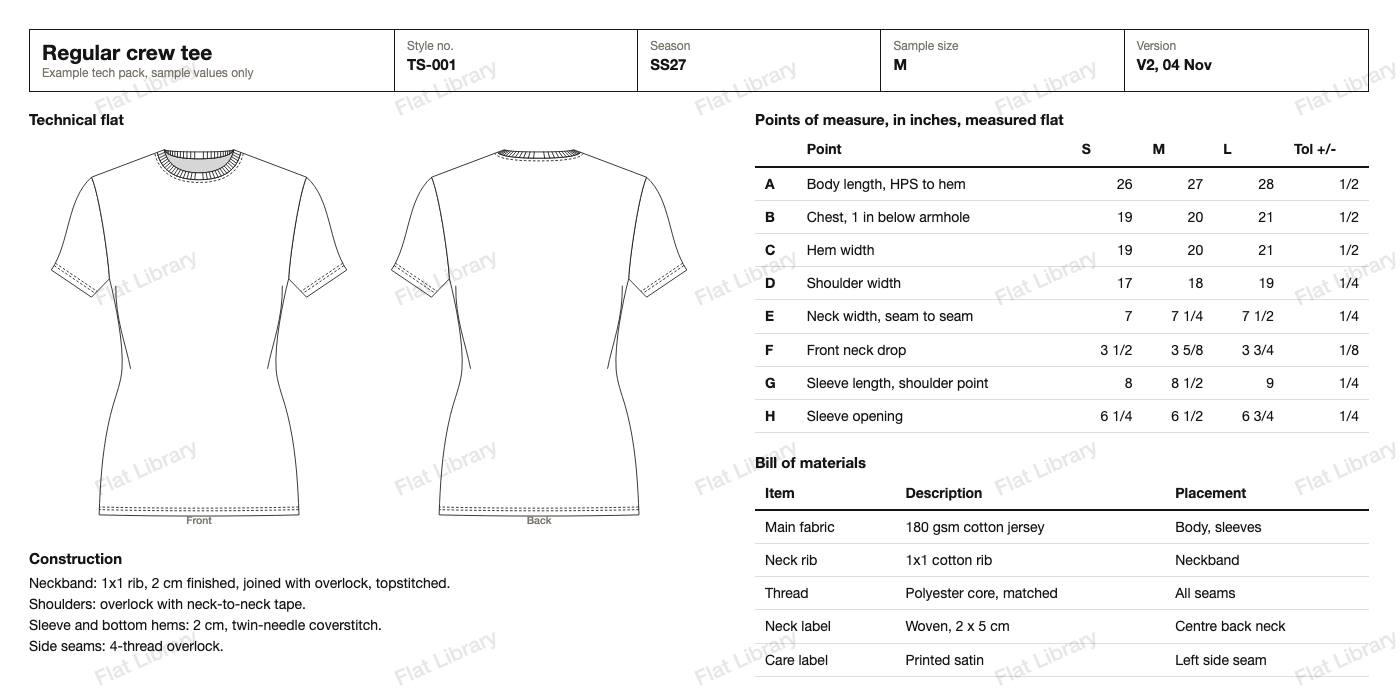
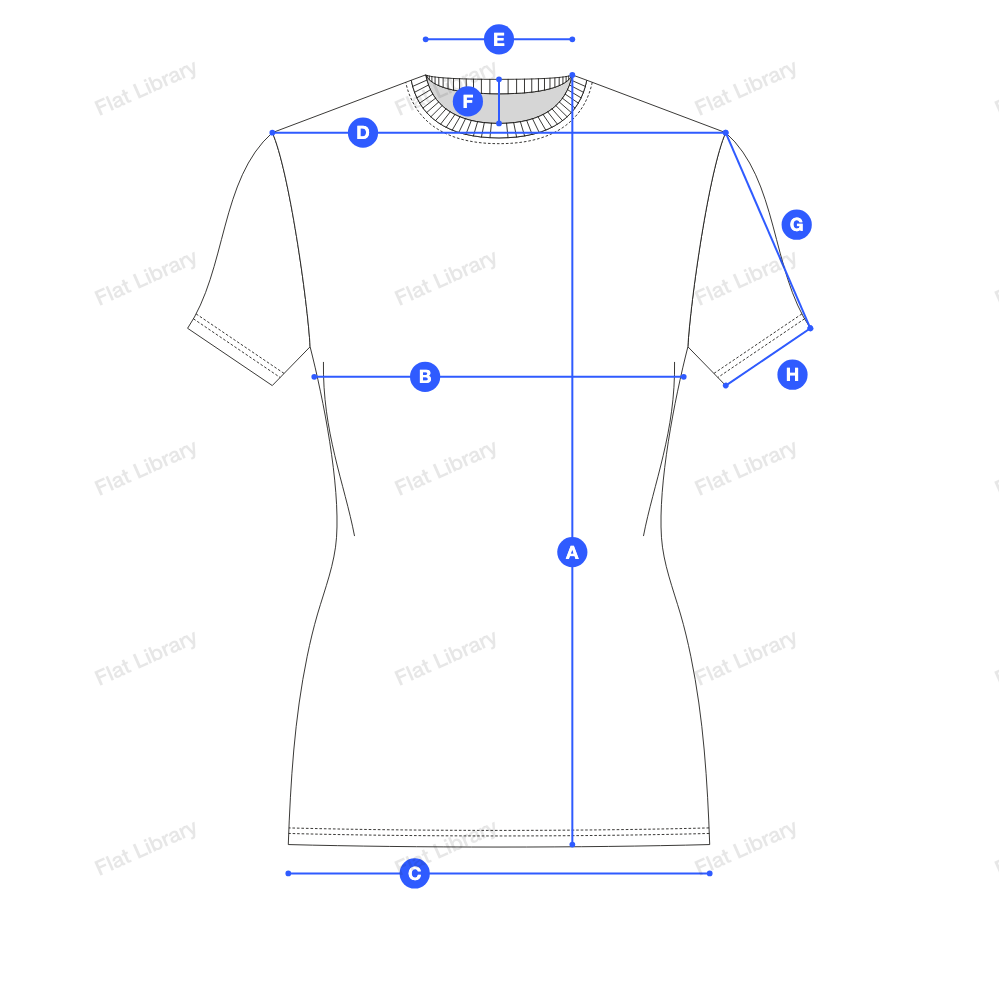
Everything so far gets written down in a tech pack: flats, construction, measurements, materials, colours and labels. Factories use it to quote a price and make the first sample, so any gap here tends to turn up as a mistake in stage 7.
Passes on: a document a factory can work from without calling you.
7. Pattern and first sample
A patternmaker turns the flats and measurements into flat pieces of paper or digital pattern pieces. A sample maker cuts and sews them, often in a stand-in fabric, to make the first version of the real garment, usually called a proto. Some teams now check the shape in 3D software before they cut anything, which can save a round.
This is the moment of truth, and first samples are rarely right. That is normal.
Passes on: a garment you can hold, and a list of what is wrong with it.
8. Fit and approval
The sample goes on a fit model or a form. Pattern and flats get corrected, and another sample is made. Most styles take more than one round. There are several types of garment samples along the way, from fit samples to the pre-production sample that gets final sign-off.
Costing happens alongside. If a garment cannot hit its target price, this is when something has to change: a simpler seam, a different fabric, fewer buttons.
Passes on: an approved sample, and a final tech pack that matches it.
9. Production
The factory buys materials, then makes the order. In broad strokes:
- Planning and cutting. Pattern pieces are laid out to waste as little fabric as possible, then many layers are cut at once.
- Sewing. Garments move through a line, or through one maker in a small workshop, using the stitches in the tech pack.
- Finishing. Washing, pressing, buttonholes, labels and packing.
- Quality checks. Inspections during and after the run, comparing goods with the approved sample and the measurements.
Passes on: finished stock, boxed and ready to ship.
10. Selling
Selling often starts before production does. Wholesale brands show samples to buyers and take orders using a line sheet, a simple catalogue that lists each style with a flat or photo, colours and prices. Direct brands photograph the range, build product pages and sometimes take pre-orders to test demand.
Then the loop closes. What sold, what was returned, and what customers complained about all feed straight back into research for next season.
Passes on: sales and feedback, back to stage 1.
Where people go wrong
- Skipping flats. Going from sketch straight to factory means the factory makes the design decisions.
- Choosing fabric last. The drawing then gets forced onto a material that cannot do it.
- Treating the first sample as the end. Budget for more than one round, in both time and money.
- Not updating the paperwork. Changes made in the sample room need to make their way back into the flats and the tech pack.
- Leaving cost until the end. Finding out late that a jacket costs double your target means redesigning it under pressure.
Questions people ask
What are the main stages of fashion design?
Research, concept, sketching, flats, material sourcing, tech pack, patternmaking, sampling, fit approval, production and selling. Companies group and name these differently, but the order rarely changes much.
What comes first, the sketch or the pattern?
The sketch. A pattern is cut to match a design, so it comes after the flats and, usually, the tech pack. Designers who work by draping on a form are the exception, because they shape the fabric first and draw from the result.
How long does it take to design a garment?
A simple garment can move quickly if the fabric is in stock and the factory is ready, while a full collection is usually planned many months ahead. Sampling tends to take the longest and the least predictable amount of time, since most styles need more than one round.
Do I need to know how to sew to be a fashion designer?
Not to start, though knowing how a garment is put together makes every drawing you make better. Many designers work with sample makers and factories for the sewing. Learning basic construction is still one of the most useful things you can do.
Where do tech packs fit in the design process?
After the design and materials are decided and before the first sample. The pack is what the factory uses to make that sample, then it gets updated after each round.
What is the difference between design and product development?
Design decides what a garment should be. Product development works out how to make it at the right quality and cost. In a small brand one person does both, and in a large one they are separate teams passing work back and forth.