Tools · 5 min read
Illustrator plugins for fashion design: what each kind does
Search for an Illustrator plugin for fashion and you get a mix of very different things. Here is what each kind does, who it suits and what to check before you buy.
The short answer
There are four main kinds of Illustrator add-on for fashion design. Garment panels, such as Flat Library, draw the flats for you. PLM connectors, such as those from Infor and Wave PLM, sync your flats to a product system. General vector plugins speed up editing. Stitch brushes and flat templates give you pieces to work with by hand. They do different jobs, and many teams use more than one.
The four kinds at a glance
| Kind | What it does | Suits |
|---|---|---|
| Garment panels | Draws garments from choices you make | Designers and small labels who want flats quickly |
| PLM connectors | Sends flats and data from Illustrator to a product system | Companies already using that PLM |
| General vector plugins | Faster path editing and drawing for any Illustrator user | People who draw everything by hand |
| Stitch brushes and templates | Ready-made pieces to place and edit by hand | People who are comfortable in Illustrator |
Garment panels
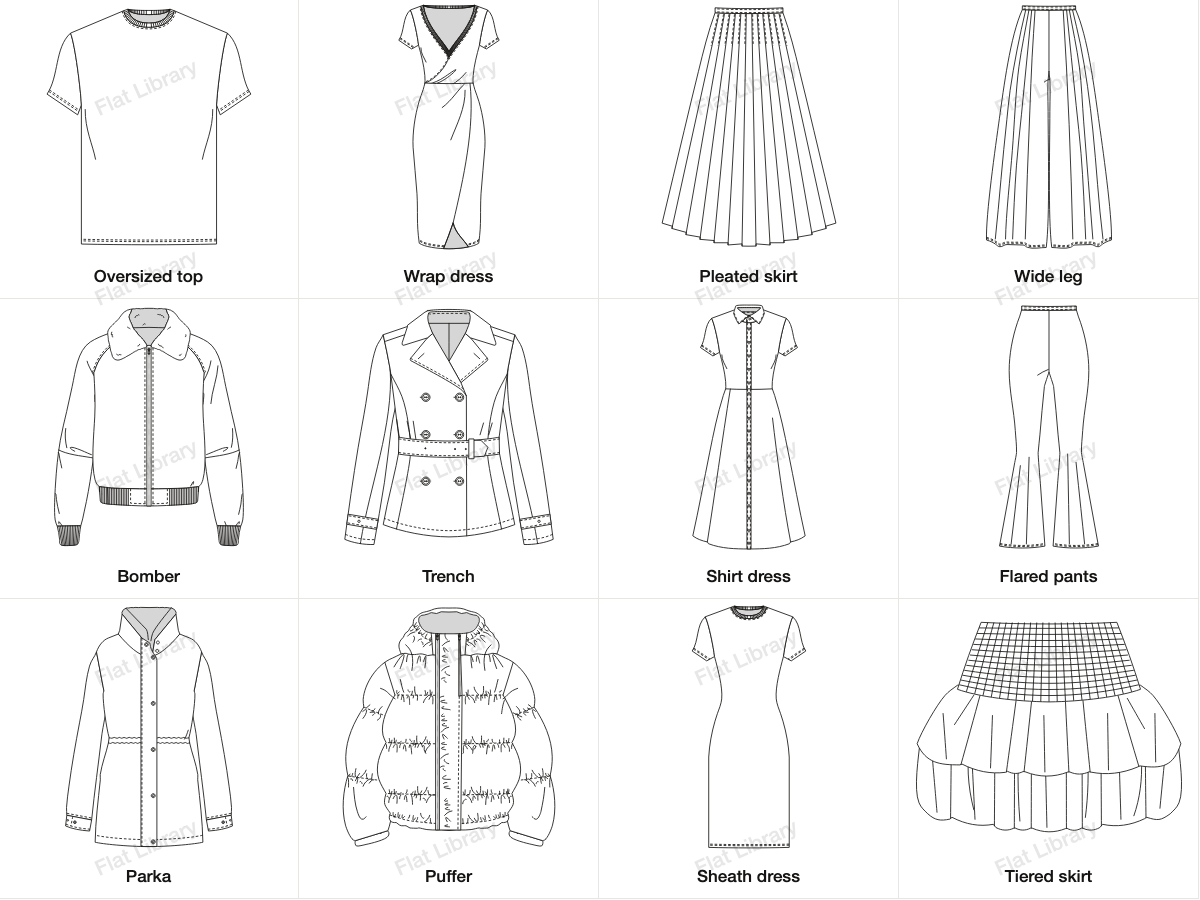
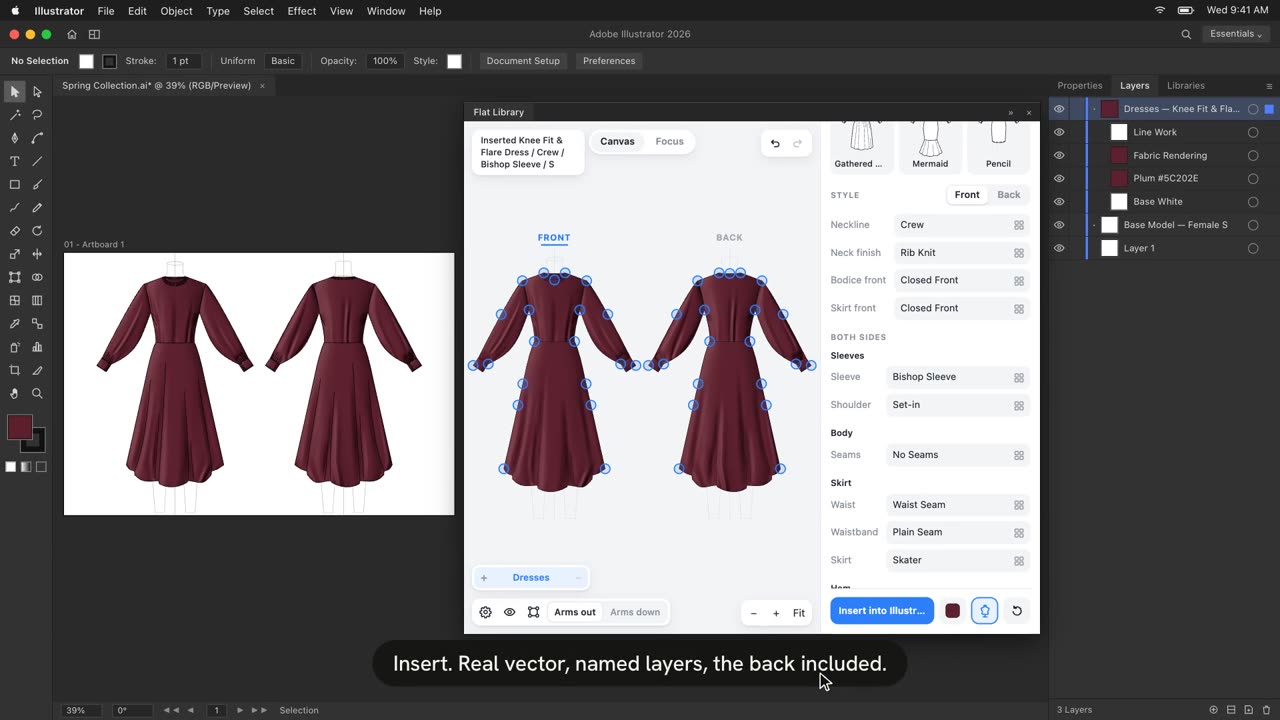
A garment panel is a window inside Illustrator that holds a library of styles. You choose what you want and it draws the garment on your artboard. The aim is to skip the slow part of making a technical flat, while still ending up with a file you can edit by hand.
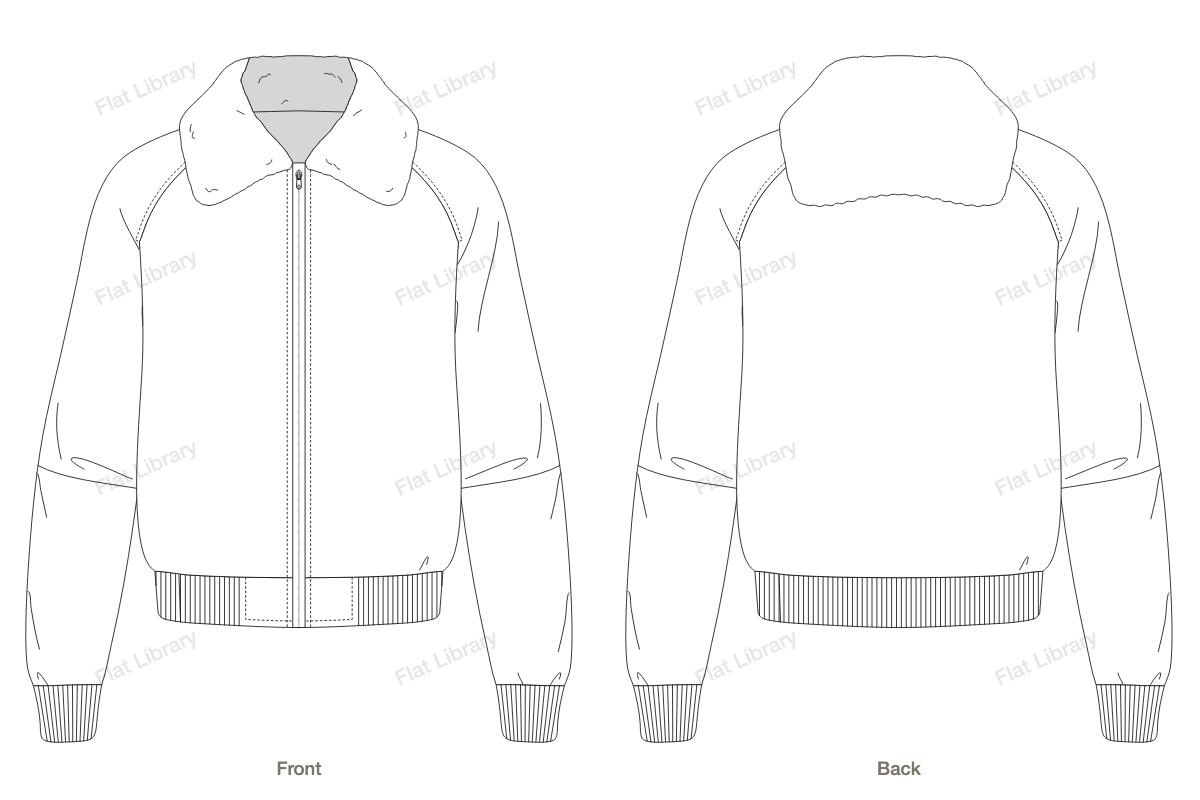
What to ask: Does it draw the back as well as the front? Can parts be swapped? Can you change the shape, or only pick from what is there? Are the results real editable vector with named layers, or a flattened picture?
PLM connectors
PLM stands for product lifecycle management: software that tracks styles, materials, costs and approvals across a company. Several PLM vendors offer an Illustrator plugin or extension that lets designers push flats into their system without leaving Illustrator. Infor and Wave PLM are two that document one.
These are for companies already on that PLM. They connect drawings to data, and they do not draw flats for you. A garment panel and a PLM connector can happily sit side by side.
General vector plugins
Astute Graphics is a well-known maker of plugins for working faster in Illustrator generally, for things like path editing, snapping and stroke control. They are not built around garments, though anyone who draws flats by hand spends the whole day on exactly those tasks.
Who it suits: technical designers and CAD artists who draw everything themselves, and do it all day.
Stitch brushes
Independent sellers offer Illustrator brush sets with stitches such as single needle, twin needle, overlock, coverstitch and zigzag, along with zips. Apply one to a path and you have a stitch line. They are inexpensive, and easy to try. The quality and usefulness vary, and some are decorative rather than technical, so see what is in a set before you buy.
You can make your own, too. Our guide to line weights and stitch lines explains how.
Flat templates
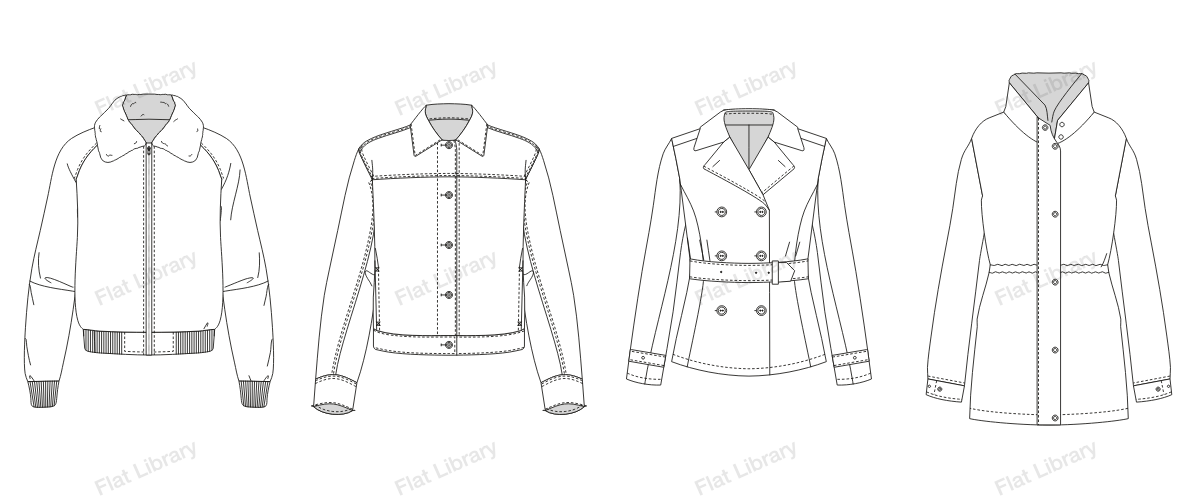
Template packs are Illustrator files of pre-drawn garments, sold by category. You open one, then edit it by hand. They are quick when a template is close to what you want, and slower when you have to redraw a large part of it.
What to ask: Is it all on one template, so garments match? Is there a back view? Are the shapes closed and the layers named? Does the licence cover commercial use?
What to check before you buy anything
- Your version and system. Check your version of Illustrator, and whether it is Mac or Windows.
- Editable output. Open a sample if you can. You should see clean paths and few anchors.
- Commercial rights. Can you use the results in the clothes you sell, and in client work?
- The price model. One-off or subscription? How does that add up over a few years, or with several seats?
- Whether it fits your garments. Look at how it handles the categories you really make. Some tools are better on tops than jackets.
- What it leaves out. Almost nothing does the whole job. Know which parts of a tech pack you will still do elsewhere.
What Flat Library does and does not do
To be straightforward about our own product:
- It does: draw tops, dresses, skirts, pants and outerwear from pictures, with front and back together. It lets you pull points to reshape a garment, gives you more than 700 trims, and adds colour or a rendered fabric. Everything inserts as named vector layers.
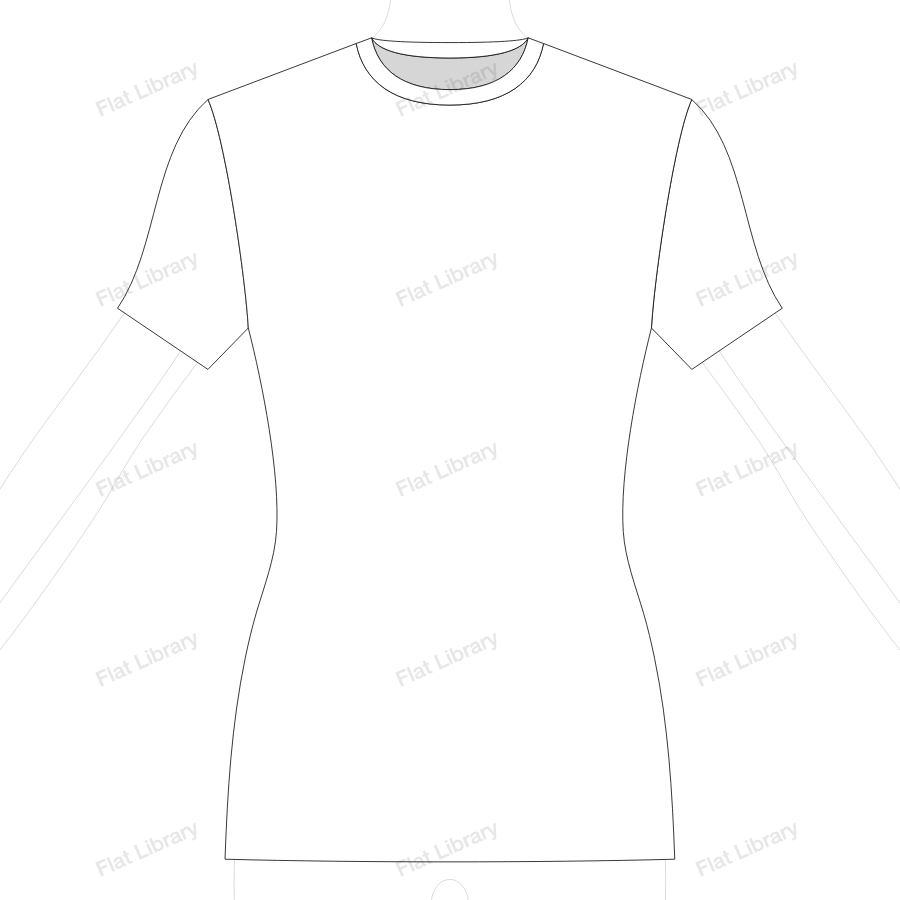
- It does not: make spec sheets or BOMs, or grade sizes. It draws on a female size S template. The installer is for Mac today, and it needs Illustrator CC 2019 or newer.
Questions people ask
Is there an Illustrator plugin that draws technical flats?
Yes, that is what a garment panel does. Flat Library is one: you choose the garment and its parts from pictures, and it draws the front and back as editable vector inside Illustrator.
Do I need a plugin to draw flats in Illustrator?
No. Illustrator can do it all by itself with the Pen tool, Reflect tool and dashed strokes. Plugins and templates save time. Many people find it worth learning the manual method first, because that is how you edit what a plugin gives you.
What is the difference between a plugin and an extension?
The terms are often mixed up. Generally, a plugin adds tools deep inside Illustrator, while an extension or panel adds a window with its own interface. For most people, what matters is what it does and whether it runs on their version.
How do I install an Illustrator panel?
It depends on the product, and they will have their own installer or instructions. With Flat Library you run the installer, restart Illustrator, then open Window, Extensions, Flat Library.
Do Illustrator plugins work on Windows and Mac?
Not always, so check before you buy. Flat Library has an installer for Mac today and Windows is not packaged yet. It needs Adobe Illustrator CC 2019 or newer.
What is the best software for technical flats?
For most people, Adobe Illustrator, since flats are vector drawings and factories and tech pack templates expect that kind of file. 3D tools like CLO are excellent for visualising a garment, and they do a different job from a line drawing.