The design process · 5 min read
How to design clothes without knowing how to draw
Drawing is one way to explain a garment, and it is not the only one. What a factory actually needs is clarity. Here are six ways to get there.
The short answer
Yes, you can design clothes without being able to draw. Factories need clear instructions rather than beautiful sketches. You can change an existing garment, drape fabric on a form, trace a template, build technical flats in software, write a detailed spec with photo references, or work with a freelance technical designer. Many people use a mix.
What you actually need to communicate
Picture the person who will make your garment. They do not care if your drawing is elegant. They need to know:
- What shape it is, from the front and back.
- Where the seams and openings go.
- What it is made of.
- How big it is, in every size.
That information can reach them in many ways. Here are six that do not rely on freehand drawing.
1. Change a garment that already exists
This is the simplest place to begin, and professionals do it all the time. Find a garment close to your idea, and list what you would change: shorter here, a wider sleeve, a different collar. Mark it up with tape or pins, then photograph it.
Measuring a garment you like also gives you a real starting point for the fit, which is usually better than a number from a chart.
2. Drape fabric on a form
Draping means shaping fabric directly on a dress form, pinning it, and marking where seams should go. Many designers think better in cloth than on paper. It teaches you how fabric behaves, and the shape you end up with can become the pattern itself.
You will need a form, some inexpensive muslin, and time to practise. This suits people who like working with their hands.
3. Trace over a template
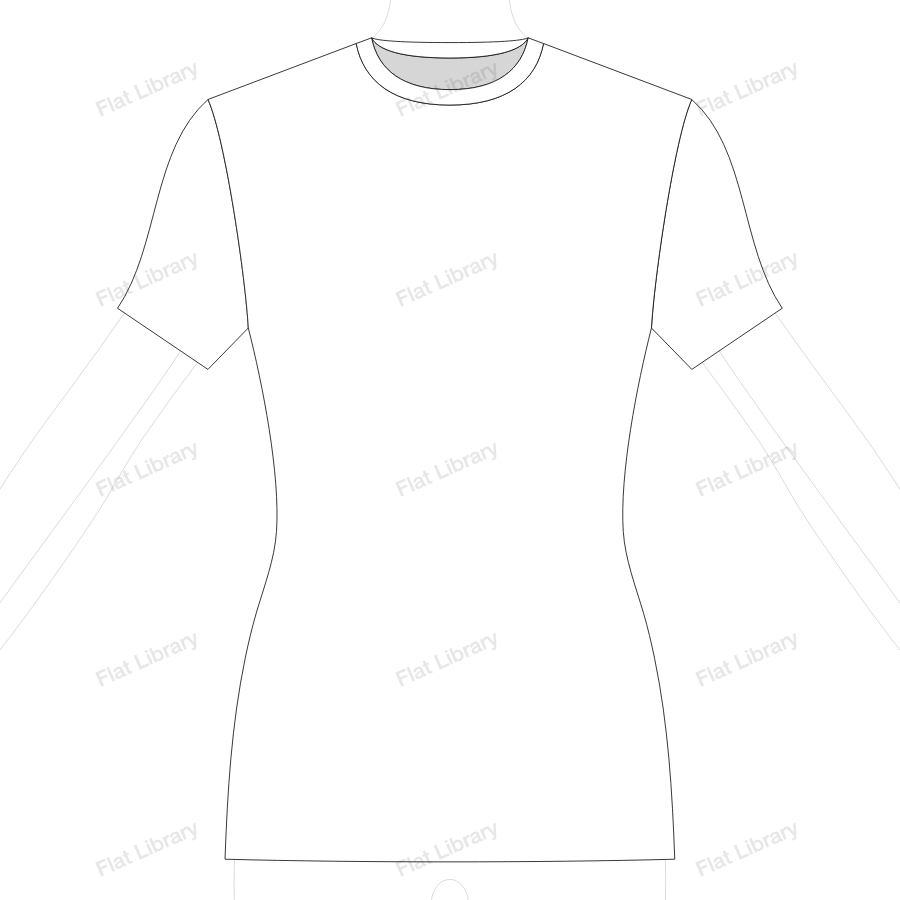
Print a body template, or a photo of a garment lying flat, and trace it with a pen or on a tablet. Tracing is not cheating. Experienced designers draw over templates too, because it keeps proportions accurate. The aim is a clear picture, and nobody is grading your hand.
4. Build flats on a computer
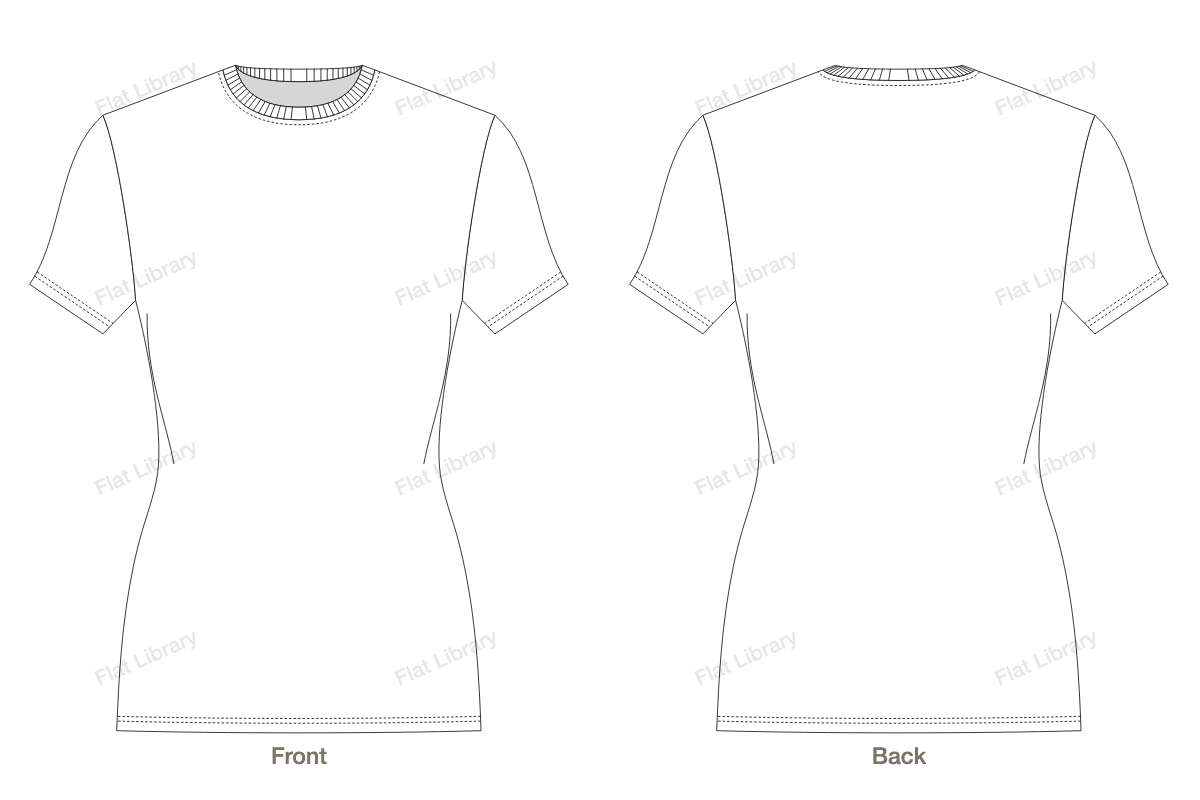
Vector software changes the skill that you need. You place points and adjust curves, so a shaky hand does not matter, and everything can be mirrored and moved. Illustrator is the professional choice. Our guide on drawing a T-shirt flat starts from zero.
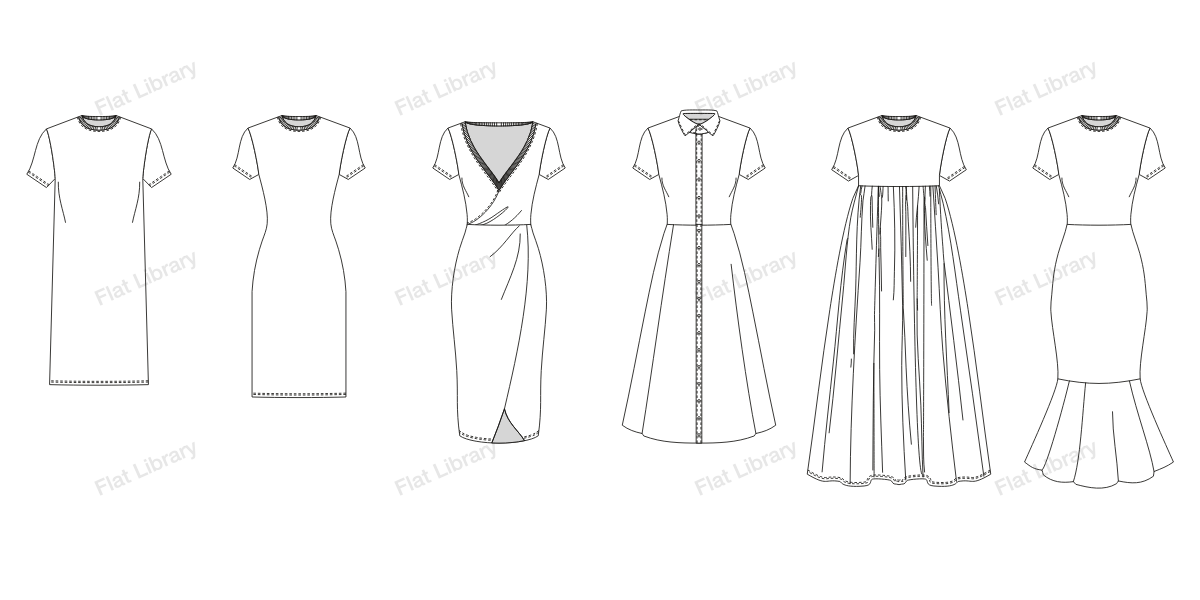
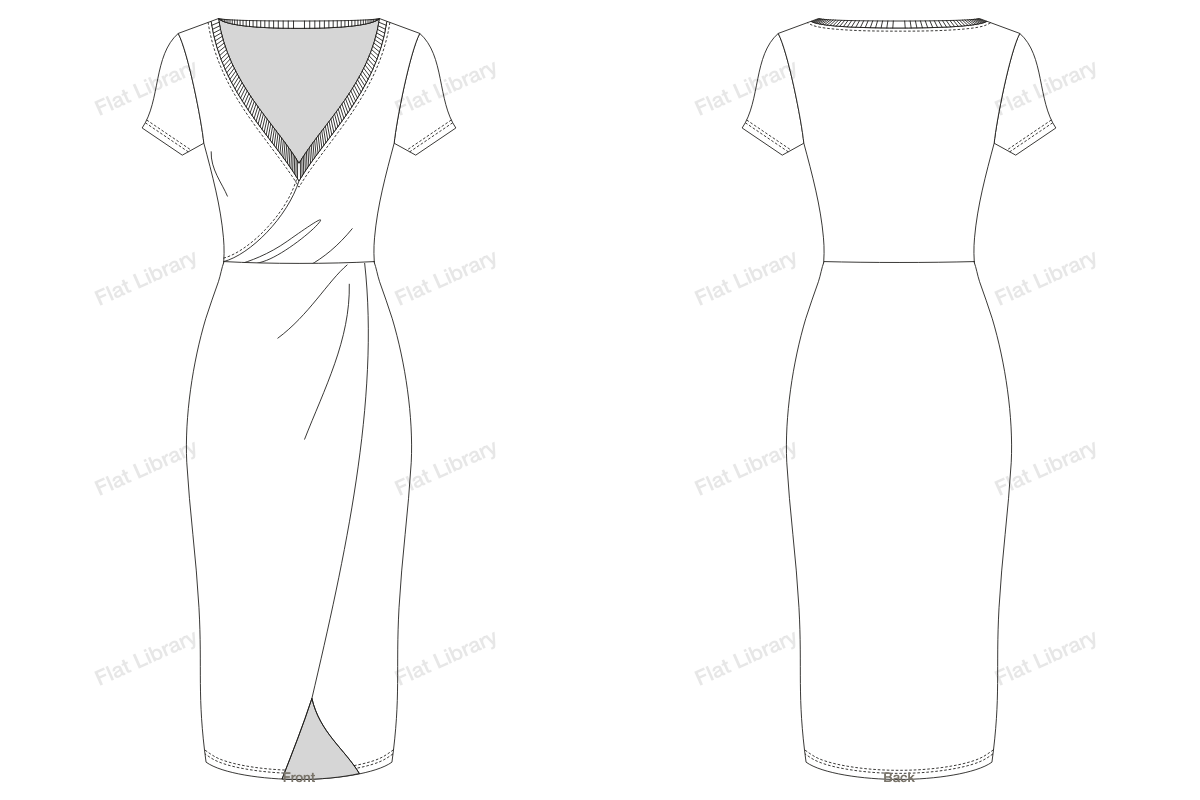
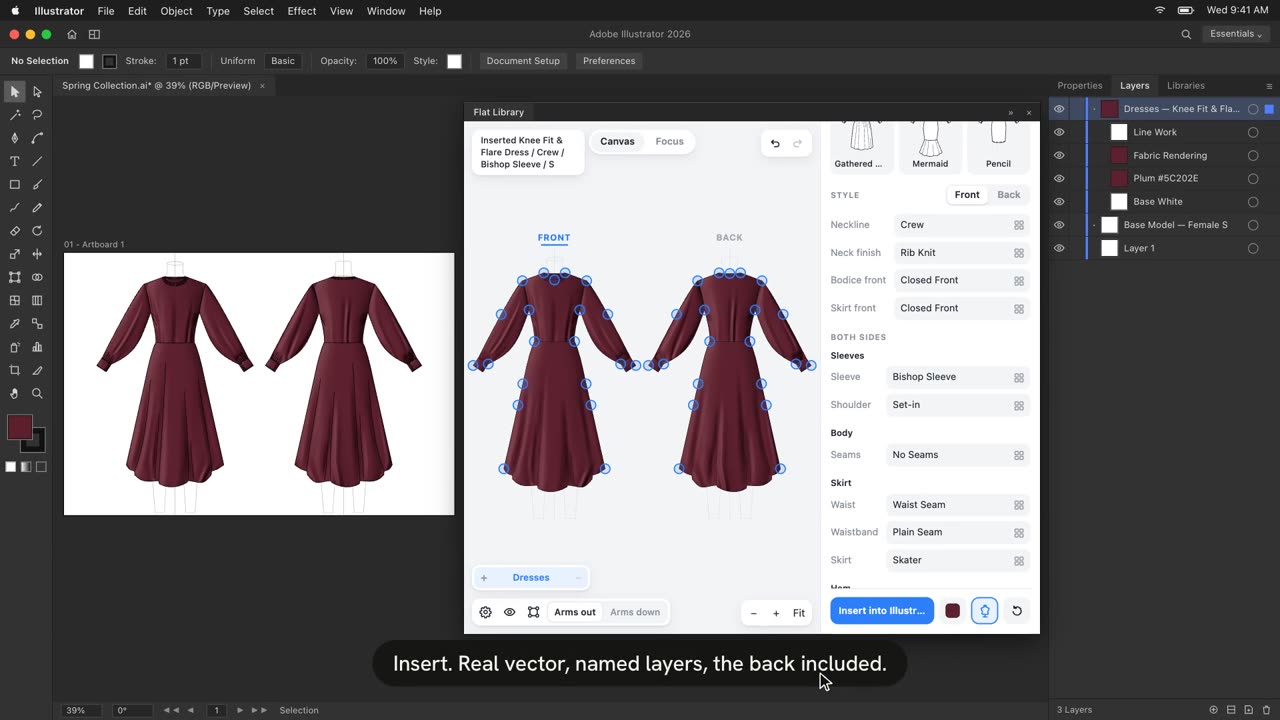
You can skip more of the skill by starting from a pre-drawn base, then changing it. That is why designers keep a flat library, and it is the idea that Flat Library is built on.
5. Write it down with photo references
A clear written brief, with photos of each detail, can take you a surprisingly long way. Use one picture for the collar, one for the sleeve, one for the hem, and write down what you want from each. Then learn the right names. Being able to say bishop sleeve or boat neck saves a lot of explaining, and our charts of sleeve types and neckline types make that easier.
6. Work with a technical designer
A freelance technical designer can turn your references into professional flats and a tech pack. You bring the idea and the taste, and they bring the construction knowledge. Here is what it tends to cost. Sit in on the process if you can, since it is a good way to learn.
A simple way to put this together
- Collect references. Save images and buy or borrow a garment close to your idea.
- Learn the names. Know what the parts of your garment are called.
- Make a flat, using a template, a panel or a freelancer. It is the document that everything else builds on.
- Choose your fabric early. Order swatches, since the fabric changes what the design can be.
- Make a tech pack and find someone to sample it.
- Learn from the sample. Each one will teach you something about how clothes are built.
The full journey is laid out in the fashion design process.
Still worth learning a little
Being unable to draw should not stop you, though a few skills will pay you back. Rough sketching helps you think quickly, even with stick figures. Learning how a garment is sewn is even more valuable, because it improves every decision you make. Sew something basic once, if you possibly can.
Questions people ask
Can I be a fashion designer if I cannot draw?
Yes. Drawing helps you think and communicate, but it is one skill among many. Some designers work mostly by draping, by editing samples or on a computer. Taste, knowledge of fabric, and understanding how garments are built tend to matter more.
Do fashion schools require drawing?
Many ask for a portfolio that includes drawing, and most teach it. It varies by school and course, so check the entry requirements for each one. Schools usually care more about your ideas than your technique, and you can learn the basics before you apply.
How can I design clothes on my computer for free?
Free vector programs such as Inkscape can draw flats, and free trials of Illustrator and other software will get you started. A photo of a garment traced in any drawing app can make a usable reference. Paid tools tend to save a lot of time as your needs grow.
Can a clothing manufacturer work from a photo?
Some can make a sample from a reference photo or garment, and many small factories do. They will fill in anything you did not specify, so the result reflects their guesses. A photo works best alongside written details on fabric, measurements and changes.
Can AI design clothes for me?
AI image tools are useful for quick ideas and mood. The images they produce often look convincing without showing how a garment is really constructed, so they are not reliable as production drawings. Most of the time you still need a true flat before you go to a factory.
What is the easiest garment to start with?
A T-shirt or a simple skirt. They have few pieces and little fitting, and plenty of factories make them, so your mistakes are cheaper and easier to learn from.